
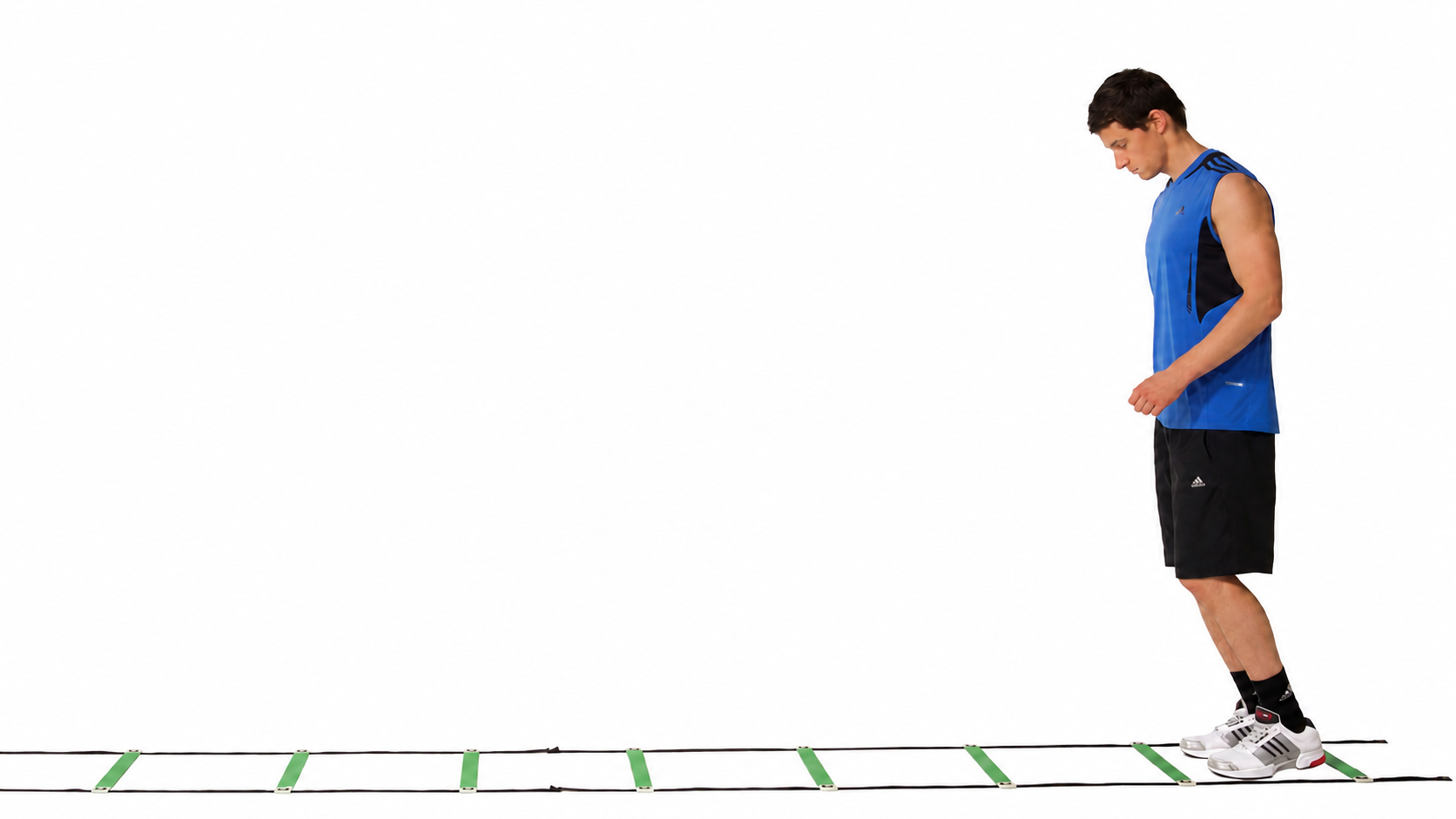
Tennis Footwork Beyond Ladder Drills: Braking, Position And Decisions
A ladder provides a consistent arrangement for practicing foot contacts. It can help organize a coordination task, but completing a pattern quickly does not demonstrate every quality needed for tennis movement. Court footwork also involves braking, creating a useful hitting position, responding to information and recovering for the next ball.
Give The Ladder A Specific Purpose
Choose the contact pattern, support conditions and gaze before timing the drill. The Fast Feet progression distinguishes conditions that should not be mixed casually. A basic downward-gaze version is a different task from performing a learned pattern while looking forward or attending to another object.
Learn the intended contacts first. Speed that comes from missing the pattern, changing the support or shortening the task is not progress in the original exercise.
Add A Useful Exit
Tennis movement rarely ends at the edge of a ladder. Link the pattern to a controlled step, a hitting position or a recovery action. The Lateral Fast Feet To Groundstroke Step-In progression makes the transition part of the exercise rather than treating ladder speed as the final outcome.
Define where the athlete should finish and how they should organize the body there. Otherwise, the fastest exit may be a position from which the player cannot usefully hit or recover.
Separate Braking From Reacceleration
A change of direction requires the athlete to manage the incoming movement before moving away again. Observe approach speed, foot placement, trunk organization and the next action. More rapid contacts are not automatically better if they fail to control the approach.
Use a manageable task and adequate recovery when movement quality is the priority. A fatigued conditioning drill answers a different question from a fresh, high-quality movement trial.
Introduce Information Progressively
A preplanned route and a reactive task differ because the second requires the athlete to use information. Add a clearly defined signal only after the basic movement is understood. Specify what the player must see and which action follows.
The Fast Feet To Ball-Drop & React progression connects a learned pattern with a response. Keep the release conditions consistent when comparing attempts. An unpredictable task can be useful practice without being a standardized test.
Connect The Movement With Tennis
The Two Shots, Ladder And Volley sequence integrates court actions and transitions. Use its written setup to distinguish the groundstroke, split-step and volley positions. Do not assume that a similar-looking route is the same progression.
Then evaluate whether the player reaches useful positions in representative tennis practice. A faster ladder trial does not, by itself, establish better movement against an opponent.
Record The Task You Actually Trained
Note the pattern, gaze, signal, exit action, repetitions and recovery. Change one major constraint at a time so the response can be interpreted. Use the stride-length and frequency library to select the relevant version, then place it in a session with a clear coaching purpose.
Related Resources
Training Articles · Exercise Library · Book And Training Resources
