Choosing Strength-Training Loads For Tennis: 1RM, Repetitions And Technique
A one-repetition maximum, or 1RM, describes the greatest load completed for one valid repetition of a specific exercise under defined conditions. It is not a general measure of athletic ability, and a number from one lift cannot be transferred directly to another movement.
Define The Exercise Before Using The Number
Record the equipment, range, support and technique criteria. A squat completed to a different depth is not the same test. A machine result does not become a barbell prescription simply because both movements involve the legs.
When maximal testing is appropriate, it requires suitable preparation, supervision and a clear protocol. It is not a prerequisite for every tennis player to begin resistance training.
Use Estimates With Appropriate Caution
Submaximal repetition tests can be used to estimate strength, but prediction equations introduce error. The estimate depends on the exercise, repetition range, technique and how close the set was to a genuine maximum effort. Do not report an estimated value as if it were directly measured.
Label it clearly in the training record. A conservative load that the athlete can control may be more useful for the next session than an impressive estimate with uncertain conditions.
Understand Percentages Without Treating Them As Instructions
If a measured or estimated 1RM is 80 kilograms, 80 percent is 64 kilograms. That arithmetic does not establish that the athlete should lift 64 kilograms today. Readiness, technique, the intended repetitions and the surrounding tennis workload still matter.
The ACSM’s 2026 guidance distinguishes training aims and stresses individualization. Recommendations for healthy adults provide context; they do not replace a sport-specific plan.
Keep A Useful Set Record
- Identify the exercise and version.
- Record the load and completed valid repetitions.
- Note whether the planned range and technique were maintained.
- Record perceived difficulty consistently, including how much capacity appeared to remain if you use that approach.
- Include unusual fatigue, symptoms or competition demands.
For example, “50 kilograms, eight controlled repetitions, planned depth maintained” is more informative than “squat felt good.” The example describes a record, not a recommended starting load.
Distinguish Strength Work From Power Work
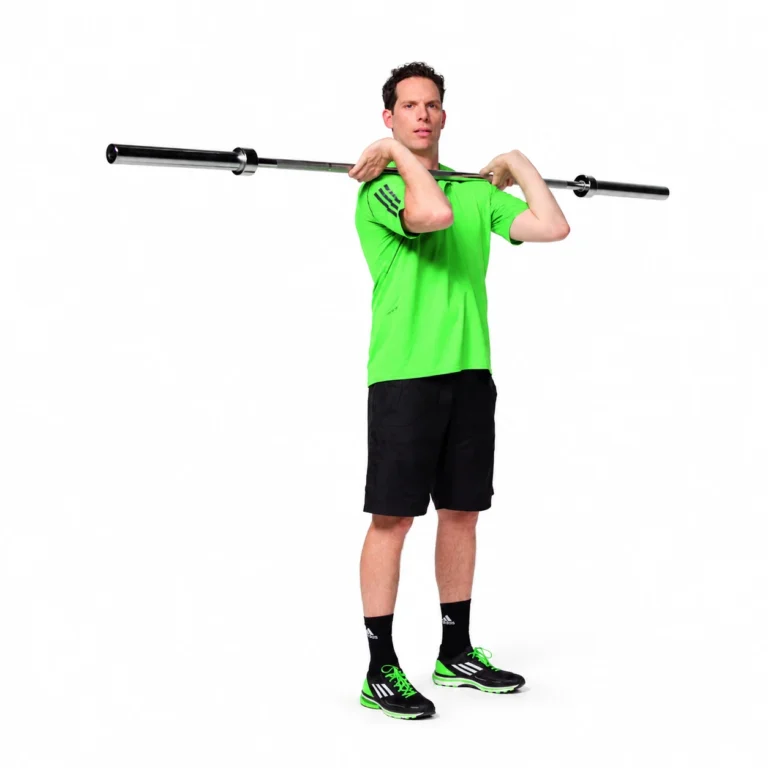
A load used for controlled strength training is not automatically appropriate for a fast, ballistic or integrated movement. Technical complexity and movement speed change the task. The Front Squat To Press, for example, also requires the athlete to coordinate the transition and establish overhead support.
Use the individual exercise guidance and qualified coaching when selecting demanding movements. Reduce or stop the set when the intended execution cannot be maintained, rather than counting altered repetitions as the planned work.
Adjust The Dose Around Tennis
Progression can involve load, repetitions, sets or a different exercise version. Do not increase all of them together without a reason. Use the two-day strength framework and in-season guide to place loading decisions in a weekly context.
The useful outcome is repeatable training that supports the player. A heavier number matters only when it represents the intended exercise and fits a plan the athlete can recover from.
Related Resources
Training Articles · Exercise Library · Book And Training Resources