Circuit Training For Tennis: Choose The Goal Before The Stations
A circuit is a way to organize exercises. It is not a training outcome by itself. Before arranging stations, decide whether the session emphasizes strength, local muscular endurance, general conditioning or practicing familiar movements efficiently. That decision controls the load, recovery and exercise order.
Do Not Make Every Station Maximal
Heavy strength work, technically demanding lifts and rapid changes of direction do not become more useful simply because they are performed with minimal rest. If fatigue prevents the required technique or output, the circuit has changed the task.
The ACSM’s 2026 resistance-training guidance emphasizes adapting resistance training to the goal and the individual. Its general healthy-adult recommendations should not be mistaken for a complete tennis circuit prescription.
Select Movements The Player Can Already Perform
Use exercises with clear setup and execution criteria. A circuit is usually a poor place to learn a complex movement under pressure from the clock. Choose a manageable version first, then decide whether its training dose suits the session.
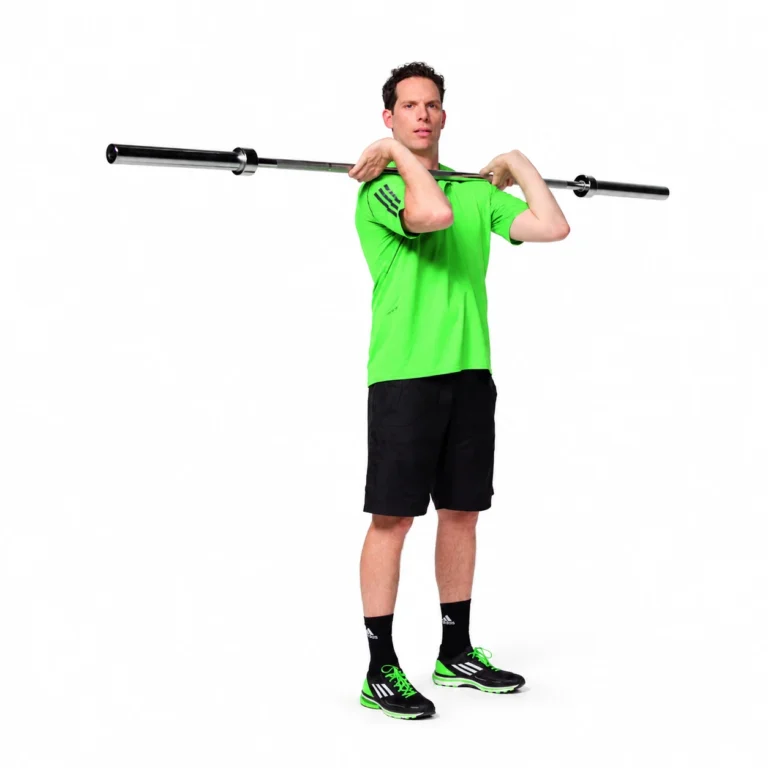
The Front Squat, Bend-Over Row and Supine Bridging illustrate different movement demands. Their inclusion in a library does not mean they should all be loaded or timed the same way.
A Station-Selection Example
For a general session using familiar movements, consider a squat pattern, an upper-body pull, a controlled single-leg task and a trunk or hip-control task. This is an organizational example, not a four-station workout prescribed to every player.
- Choose the exercise variation that matches current technique and equipment.
- Define repetitions or work duration according to the intended outcome.
- Provide recovery that allows the next station to retain its purpose.
- Set a stopping rule for loss of control or unacceptable fatigue.
Do not write a percentage of one-repetition maximum beside an exercise unless that measure is meaningful and available for the exact movement. A band exercise and an externally loaded squat require different ways of describing resistance.
Order Stations With Fatigue In Mind
Alternating movement patterns can reduce immediate local repetition, but it does not remove whole-session fatigue. A demanding lower-body station can still affect subsequent footwork. Decide whether you want to observe movement while fresh or deliberately train repeated effort; do not confuse those aims.
When power or speed is the priority, organize that work so quality can be preserved. Completing a station faster is not useful if the athlete shortens the range or changes the movement to keep up.
Progress One Demand At A Time
Record the station order, exercise versions, resistance, repetitions and rest. Change one major demand, then review the response. Adding load, extra rounds and less rest together makes it difficult to know which change helped or caused problems.
Use the monitoring worksheet and weekly planner to place the circuit alongside court practice and matches. A session that looks efficient on paper still needs to fit the player and the week.
Related Resources
Training Articles · Exercise Library · Book And Training Resources