
Plate Jacks I–II For Tennis | 7.119–7.120
Book family 7.119–7.120 from Advanced Concepts of Strength & Conditioning for Tennis. Select the support, timing and return conditions for the intended progression.
Video References
The clip omits the rings and does not clearly establish I’s full one-second hold in the narrow overhead position. It uses downward gaze at the wide squat landing. Follow the written ring contacts, I’s hold, and II’s forward-gaze landing rather than treating the clip as a complete demonstration of either timing protocol.
Modified Wide-To-Narrow Jump Reference
Setup And Execution
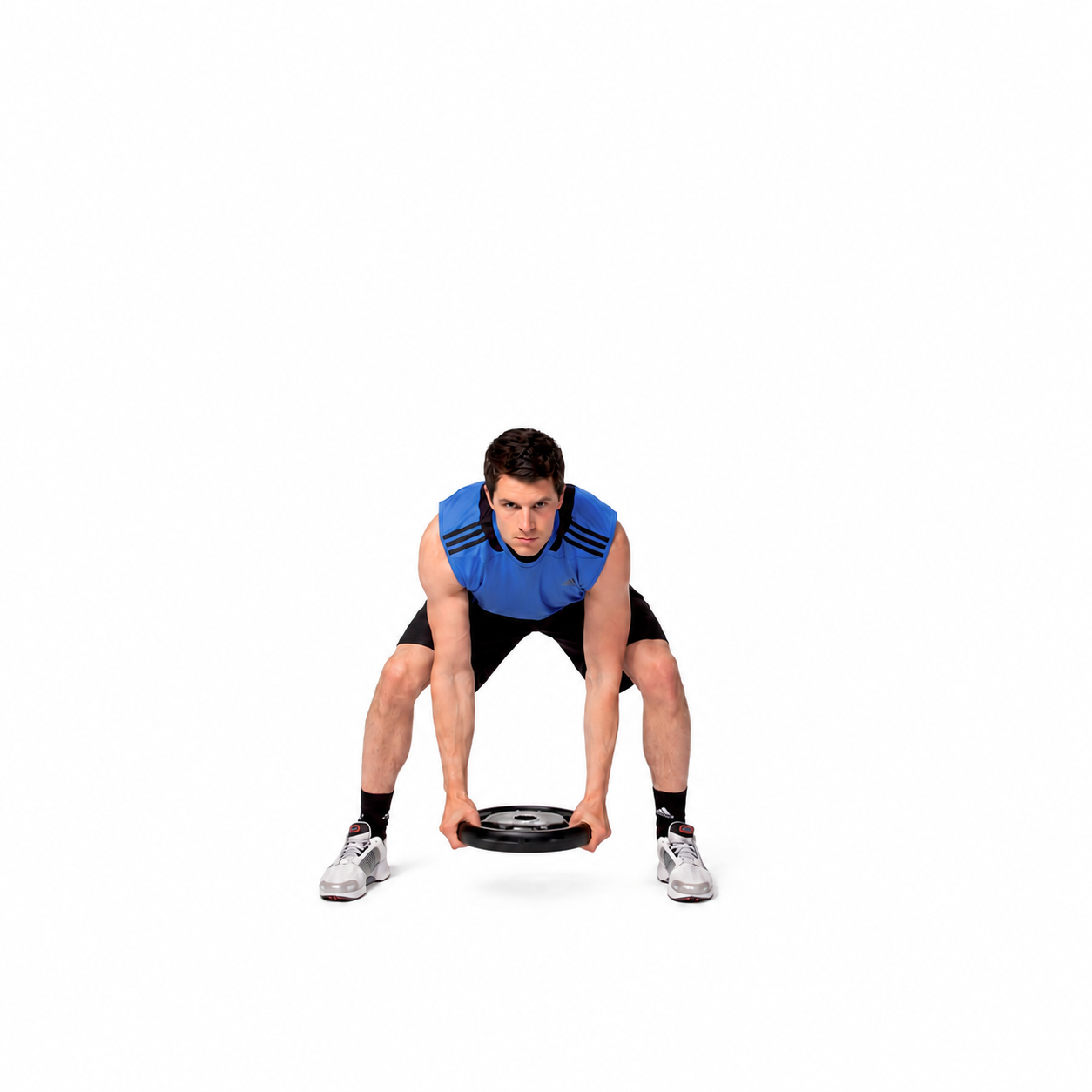
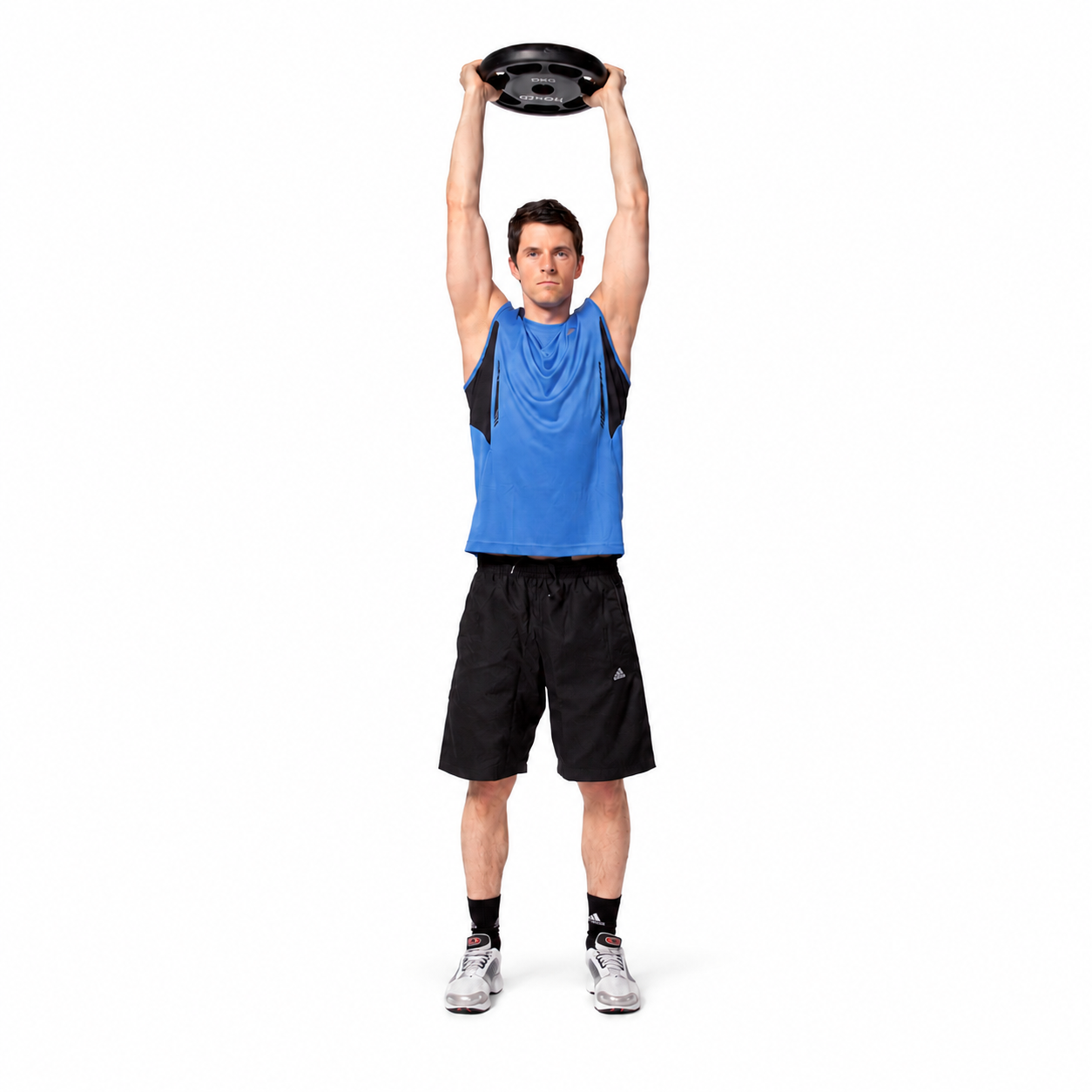
Place two rings slightly wider than shoulder width and start with one foot in each. Hold the plate with both hands, squat and lower it between the legs with the arms extended. Jump upward from both feet, bring the feet together between the rings and raise the plate overhead. Jump back to the wider stance, placing one foot in each ring as you return to the squat and lower the plate. Keep both landing positions fixed rather than moving forward or backward.
Version I includes a one-second hold in the narrow overhead position before the outward jump and uses downward gaze at the wide squat landing. Version II removes that hold and uses forward gaze at the landing. Establish the squat and overhead-squat positions before linking them through the jump. Coordinate the plate movement with the change in foot position; the arms should not finish overhead while the feet remain in the wide squat stance.
Technique Photographs

Book Progressions
7.119 — Plate Jacks I
Jump inward while raising the plate overhead, land in the central narrow position and hold for one second. Jump outward into the rings while lowering the plate and looking down at the ground landing.
7.120 — Plate Jacks Ii
Use the same wider-squat to narrow-overhead jump, then immediately jump outward into the rings with forward gaze at the wider landing.
Choose The Load And Progression
Use a securely gripped plate that permits the prescribed contacts and recovery. Reduce the plate mass or simplify the movement when control deteriorates. For partner blocks, establish a manageable ball and feed before increasing return frequency.
Historical equipment ranges in the original book are not starting-load prescriptions. Establish the movement and support position before increasing load or return frequency. Do not change support difficulty and load together simply to reach a higher numbered level.