
Reverse Lunge To MB Diagonal Reach (II) | Exercise 6.116
Functional training exercise 6.116 from Advanced Concepts of Strength & Conditioning for Tennis. Watch the movement, then review the setup and technique cues.
Video Reference: Bent-Elbow Variation
Before Watching: The clip shows reverse steps and diagonal reaches on both sides, but bends the elbows instead of retaining the written extended-arm condition. It is a reference for parts of the sequence, not a complete demonstration of that source execution. The jumping version 6.118 is not shown.
Technique Photographs
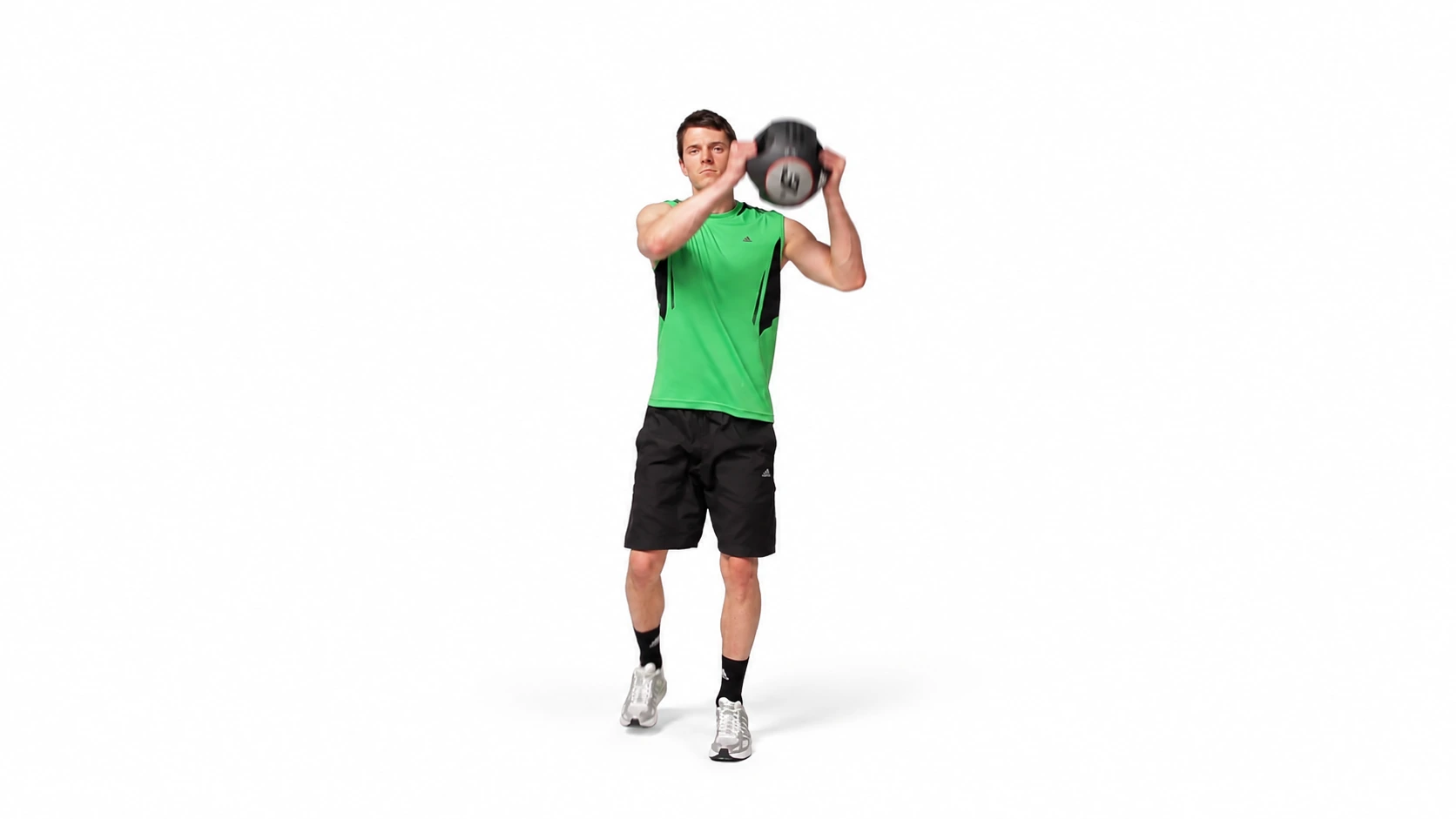
Starting Position
Stand in an athletic stance with the medicine ball in both hands.
How To Perform The Exercise
Step back into a reverse lunge and lower the ball toward the hip on the stepping-leg side. Keep both arms extended throughout the prescribed movement. As you return to the athletic stance, rotate and reach the ball diagonally overhead to the other side. Repeat on the opposite leg.
Coaching Points
Distinguish this progression by the backward step and the diagonal reach during the return to standing. Control both the knee and trunk throughout.
Equipment: Medicine ball
Book difficulty level: 2 of 5
Written Variations: 6.117–6.118
6.117 Alternating Reverse Lunges: Step back with the right foot and place the ball low beside the right hip; recover standing with a diagonal reach above the left shoulder. Then step back with the left foot and use the mirrored low-left-hip to high-right-shoulder path. Original difficulty: 3. The printed left-side instructions repeat right hip; the corrected description mirrors the side.
6.118 Alternating Jump: Drive vertically out of the right-foot-back lunge with the high-left reach, then land in the opposite lunge and recover the low-left-hip setup. Jump with the high-right reach and land in the right-foot-back lunge. Select height, load and linked sequence for controlled landings. Original difficulty: 4. The nonjumping clip does not demonstrate flight and landing.
No one-second hold is prescribed for this family. Keep arm position, step direction and reach timing explicit when selecting the version.
Progressions And Related Exercises
Browse the Functional Training library or explore tennis conditioning workouts to use these movements in a session.
For the full exercise instructions, see Advanced Concepts of Strength & Conditioning for Tennis, exercise 6.116.