
Medicine-Ball Trunk-Twist Pass For Tennis | 7.240–7.244
Book family 7.240–7.244 from Advanced Concepts of Strength & Conditioning for Tennis.
Video References And Limits
The partner clips demonstrate fixed two-foot, diagonal-lunge and single-leg passes and receiving positions. The base clip omits the two rings specified in 7.240. The clips do not demonstrate the side-step and alternating support transfers in 7.243–7.244. Practise both lead or support legs.
Two-Foot Partner Pass
Diagonal-Lunge Partner Pass
Single-Leg Partner Pass
Setup And Execution
Throw and receiving references — partner version
Pass, Receive And Repeat
I — 7.240: place two rings shoulder-width apart, approximately eight feet from a suitable concrete wall. Stand inside them with the knees and hips slightly flexed and the medicine ball held in both hands in front of the trunk. Rotate away from the target, keeping forward gaze and a neutral head position. Initiate the return with the hips and trunk, extend the hips onto the balls of the feet, and rotate toward the target. Lean forward and release at hip level. Catch the wall rebound or partner’s return and quickly repeat. Select a ball that allows an explosive pass and a controlled catch; the source equipment range is 2–8 lb.
II — 7.241: use a diagonal lunge, with the lead foot flat and weight through its heel. Maintain the lunge during the rotation, hip-level release and return catch. Repeat with the opposite lead leg. III — 7.242: use a diagonal single-leg stance, with the support knee and hip slightly flexed and the free knee flexed approximately 90°. Keep the same support leg during the pass and catch, then repeat on the other leg.
IV — 7.243: side-step left, then establish a diagonal lunge on the right lead leg. Pass with the hip-and-trunk sequence, rotate the free hip forward and transfer onto the left foot. Receive the return there before side-stepping right and repeating from a left-leg lunge. V — 7.244: use a diagonal right-leg single-leg stance after the leftward side-step; pass, rotate the free hip forward and land on the left leg before catching. Side-step right and reverse the leg sequence. These alternating versions require a support transfer during the pass, not just a new stance between stationary repetitions.
Prepare with the corresponding medicine-ball trunk rotation and trunk-twist throw. Keep the forward gaze, hip-led initiation and repeatable receiving position as the stance demand increases. Reduce the demand when an arm-only release, early release or backward trunk lean disrupts balance or the return catch.
Technique Photographs

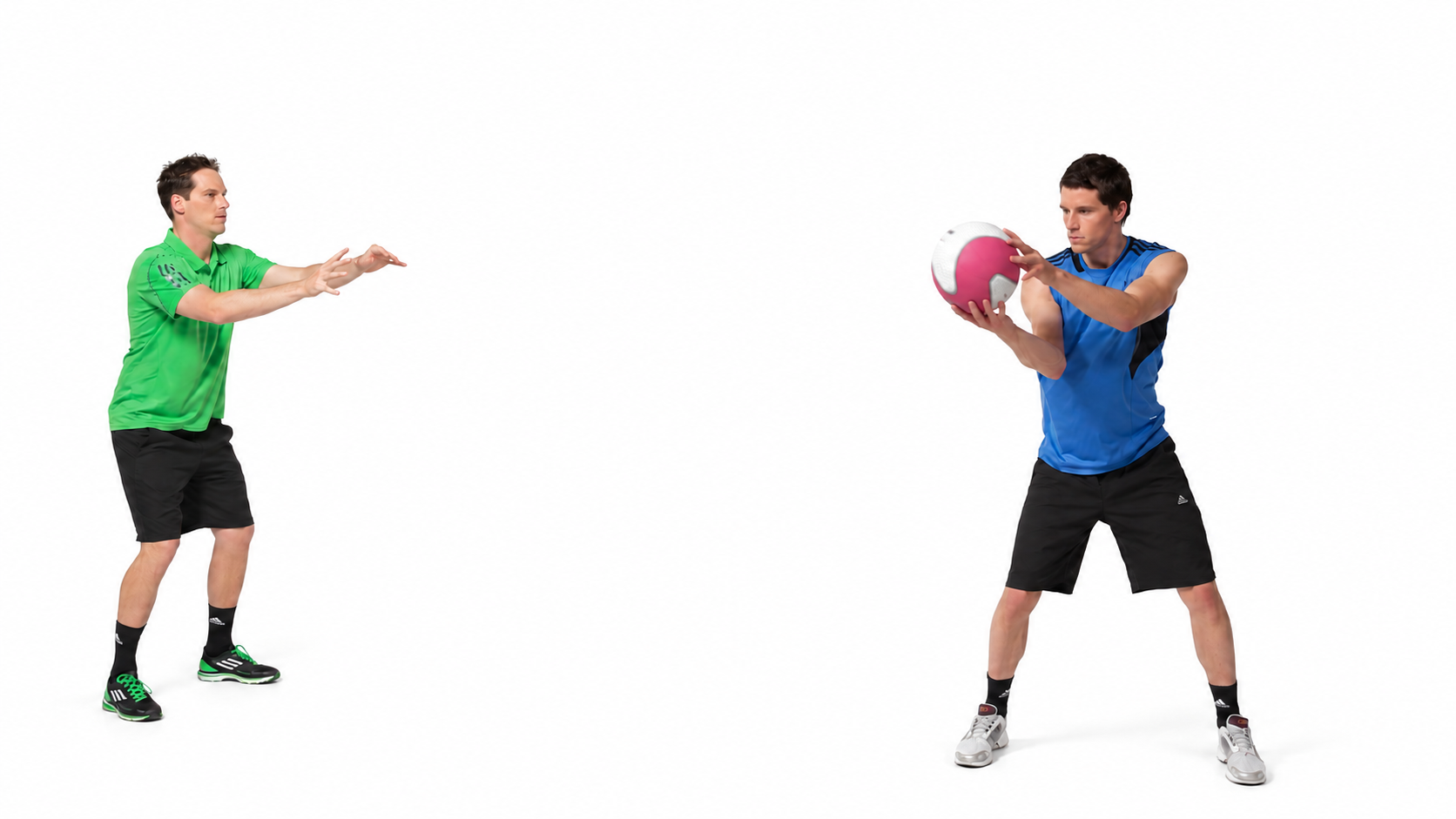
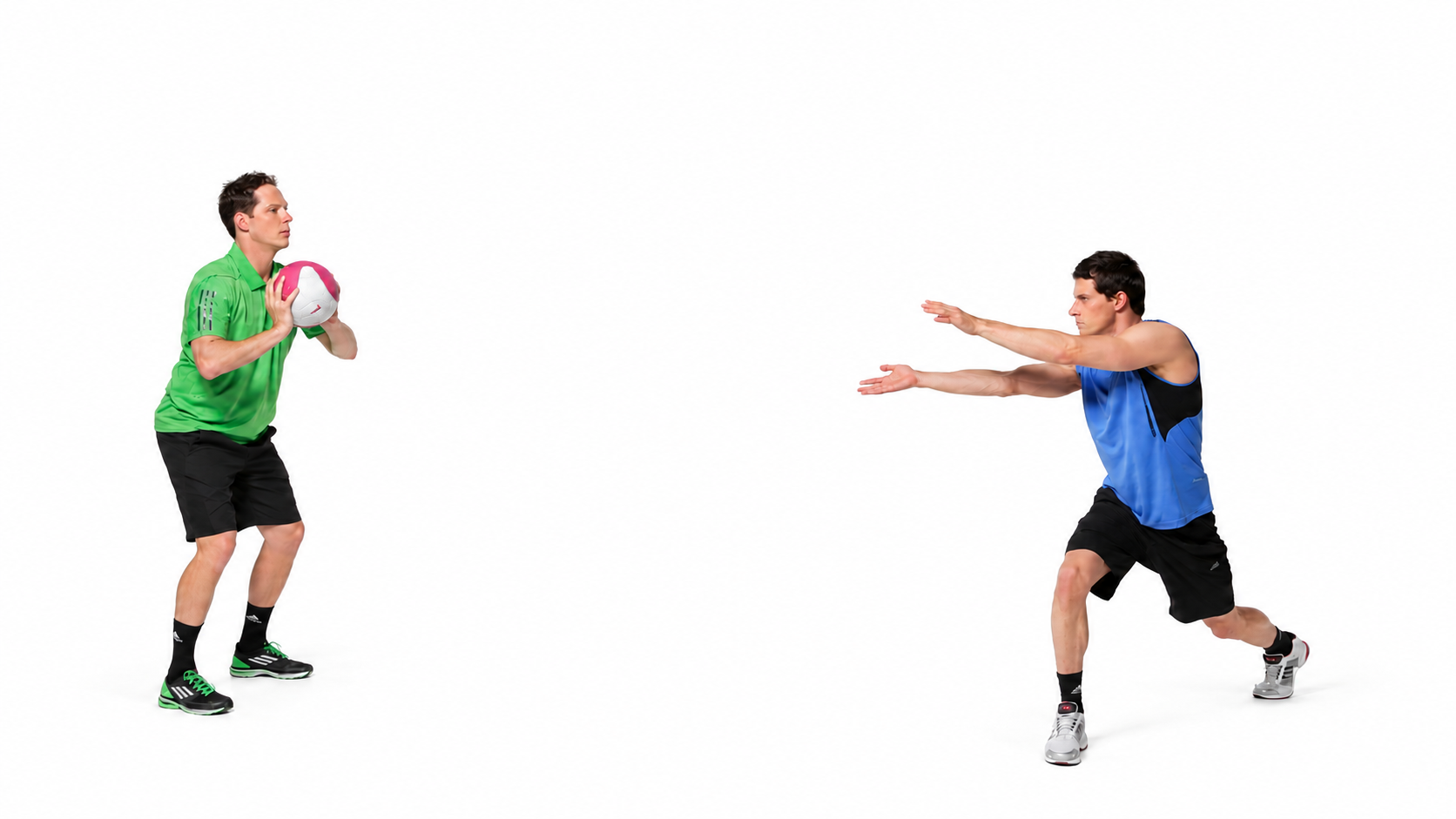


Book Progressions
7.240 — Mb Trunk Twist Pass (I)
The exercise practices repeated rotational medicine-ball passes from a bilateral athletic stance, catching each return before the next pass.
7.241 — Mb Trunk Twist Pass (Ii): Diagonal Lunge
The exercise practices repeated rotational medicine-ball passes from a pre-established diagonal lunge, catching the return while maintaining the support position.
7.242 — Mb Trunk Twist Pass (Iii): Single-Leg
The exercise practices repeated rotational medicine-ball passes from a diagonal single-leg stance, maintaining the same support leg while catching the return.
7.243 — Mb Trunk Twist Pass (Iv): Altern. Diag. Lunge
The exercise combines a side-step, diagonal lunge and rotational pass with a transfer onto the opposite leg, then a catch and repetition toward the other side.
7.244 — Mb Trunk Twist Pass (V): Alternate SL
The exercise combines a side-step, diagonal single-leg rotational pass and landing on the other leg, then catches the return and repeats from the opposite side.
Adjust The Training Demand
Preserve the selected receiving position and a controlled return catch. Establish the fixed-position variation before adding the side-step and support transfer. The source lists a 2–8 lb medicine ball; select a load that preserves the intended sequence.
Related Exercise Families
Advanced Concepts of Strength & Conditioning for Tennis · Tennis Conditioning Workouts · Exercise Library